San Antonio is one of the fastest-growing cities in the United States. Its population has expanded consistently for more than a decade, and the physical footprint of the city has grown alongside it new neighborhoods pushing into the Hill Country, commercial corridors being redeveloped, aging infrastructure being replaced, and industrial facilities being built to support the city’s expanding economy. Behind every phase of that growth is a construction company doing the foundational work that makes everything else possible.
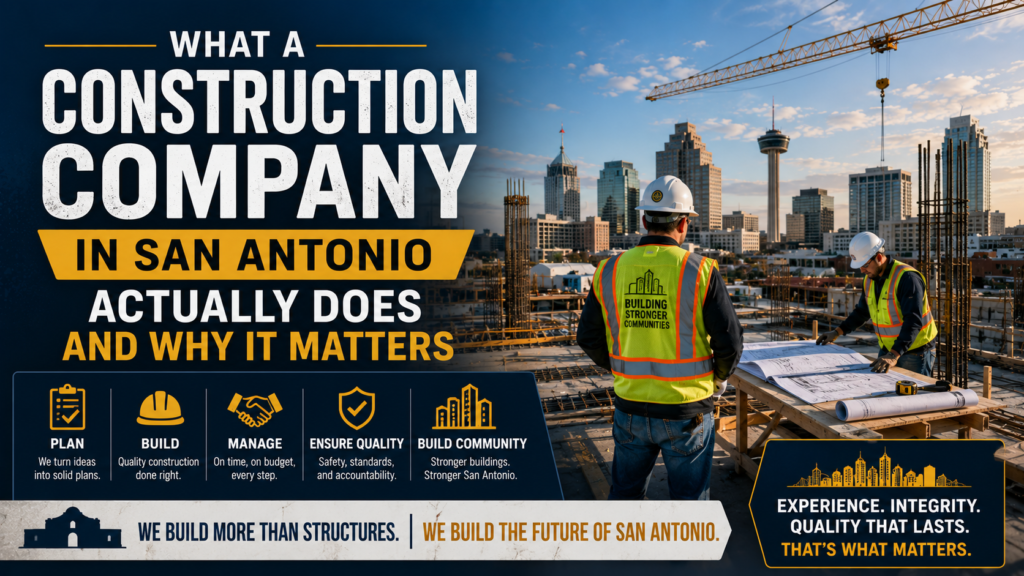
But what does a Construction Company San Antonio actually do? For property owners, developers, business operators, and municipal planners, understanding the scope of construction services what they include, how they are sequenced, and why each phase matters is essential to making informed decisions about any project.
The Scope of Modern Construction Work
Construction is often understood narrowly as the act of building erecting walls, roofing a structure, finishing interiors. In reality, construction encompasses a far broader range of activities that begin long before any structure rises and continue long after the final coat of paint dries. A full-service construction company in San Antonio manages every phase of a project, from site preparation through completion.
Site work is typically the first discipline to engage on any project. This includes demolishing existing structures, clearing vegetation, excavating foundations, grading and compacting earth, installing drainage systems, and preparing the land to receive whatever is being built. Done incorrectly, site work creates problems that no amount of quality above-grade construction can fully correct an improperly graded site floods; a poorly compacted subgrade causes foundations to settle.
Structural work follows, encompassing foundations, slabs, framing, and the skeleton of whatever structure is being erected. Concrete work, steel, masonry, and carpentry all fall within this phase. The structural choices made here determine the longevity and performance of the building over its entire life.
Mechanical, electrical, and plumbing systems collectively referred to as MEP are installed within the structure and must be coordinated carefully with structural work to avoid conflicts and ensure accessibility. Finishes, fixtures, and exterior work complete the project, making it functional and ready for occupancy.
San Antonio’s Construction Environment
San Antonio presents specific conditions that experienced local construction companies understand and plan for from the outset. The city’s geology varies significantly across its extent. The central and northern portions sit atop the Edwards Plateau, characterized by shallow soil over limestone terrain that requires specialized excavation equipment and techniques. The southern and eastern portions tend to have deeper clay soils that expand and contract with moisture content, placing particular demands on foundation design and drainage planning.
The climate compounds these soil challenges. San Antonio’s summers are long, intensely hot, and periodically dry. Heat affects concrete curing schedules, equipment performance, and worker safety. Sudden heavy rainfall the Hill Country is one of the most flash-flood-prone regions in the country can transform a construction site overnight, requiring careful stormwater management. Contractors who have worked in San Antonio for years develop the site planning and scheduling practices to navigate these conditions without compromising quality or timelines.
The city also has an active permitting and inspection process administered through the Development Services Department. Projects of any meaningful scale require permits, inspections at specific milestones, and compliance with adopted building codes. Experienced local contractors are familiar with these processes and manage them efficiently as a routine part of project execution.
Commercial vs. Residential Construction
Construction companies in San Antonio serve both commercial and residential markets, and these markets have meaningfully different characteristics. Residential construction custom homes, renovations, additions, and multi-family developments tends to be governed primarily by relationship, quality of finish, and alignment with a homeowner’s vision. The project scales are typically smaller, but the personal stakes are high.
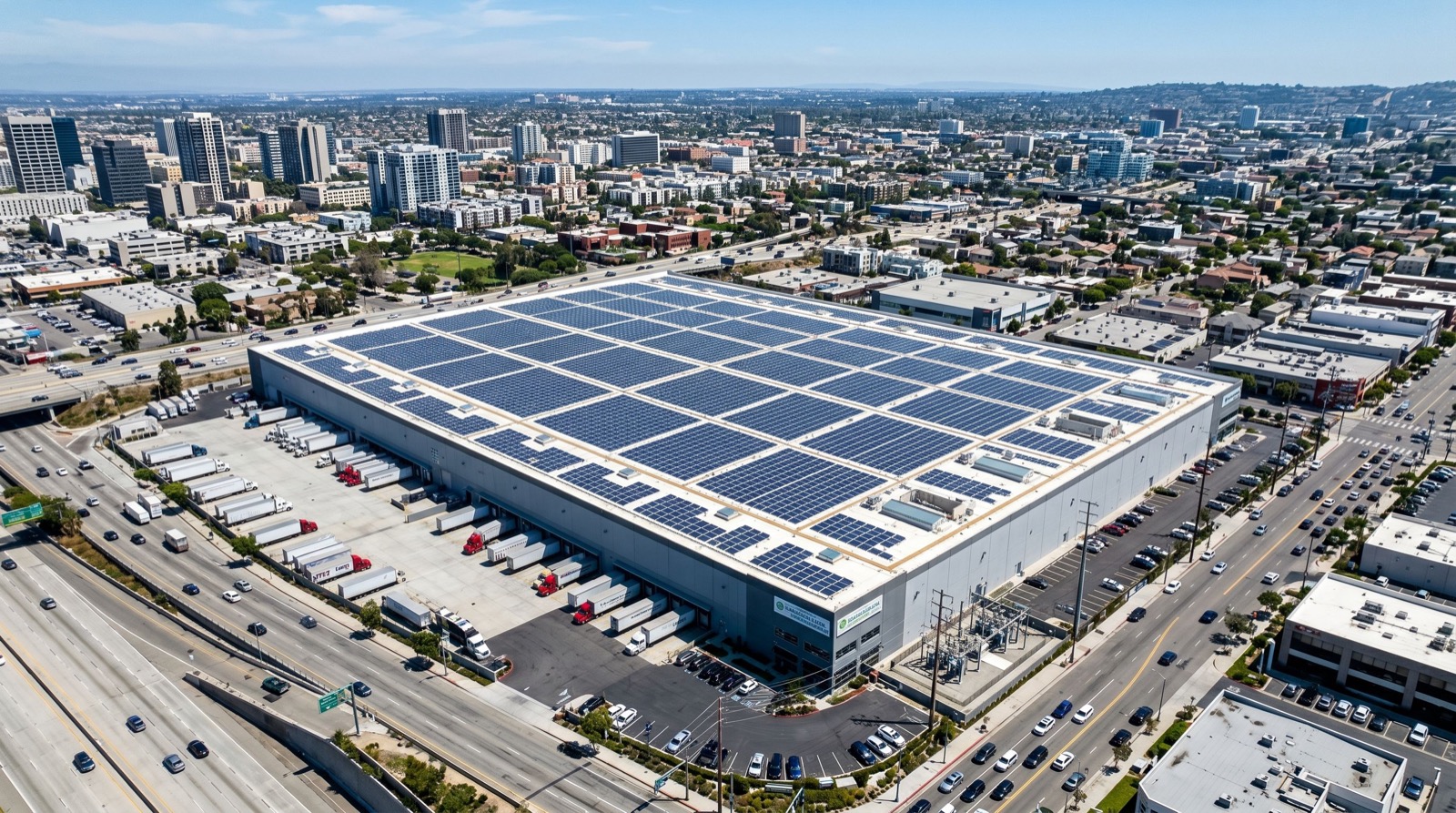
Commercial construction office buildings, retail facilities, warehouses, industrial sites, medical facilities, and institutional projects operates under different demands. Commercial projects typically involve multiple stakeholders, formal bidding and procurement processes, detailed specifications documents, and rigorous inspection schedules. Commercial contractors must manage larger crews, coordinate multiple subcontractors simultaneously, and maintain detailed project documentation.
A construction company that serves both markets brings a broader perspective to each. The discipline and documentation practices of commercial work benefit residential clients. The attention to detail and responsiveness expected in residential work elevates the quality of commercial project execution.
General Contracting and Project Management
On any project beyond simple scope, a general contractor serves as the organizing intelligence of the construction process. The general contractor (GC) holds the prime contract with the owner, manages all subcontractors, coordinates the sequencing of work, enforces quality standards, tracks budget and schedule, and serves as the single point of accountability for the entire project.
This role is more demanding than it might appear. Construction is a complex, dynamic environment where conditions change materials arrive late, weather delays certain activities, subsurface conditions turn out to be different from what surveys suggested. The GC’s job is to anticipate these disruptions wherever possible and respond effectively when they occur anyway, keeping the project moving without compromising the work.
For owners and developers, having a skilled general contractor is not a luxury it is the mechanism through which a complex project becomes a coherent outcome. The alternative, trying to coordinate dozens of independent contractors without a central manager, consistently produces cost overruns, schedule failures, and quality gaps.
What Marks a Quality Construction Company
Across San Antonio’s construction landscape, several markers reliably distinguish quality operators from the rest. Licensing and insurance are the baseline Texas requires contractors to hold appropriate licenses for the work they perform, and proper general liability and workers’ compensation insurance protects both the contractor and the owner if something goes wrong on site.
Experience with comparable project types matters enormously. A contractor with a strong track record in commercial tenant improvements is not automatically well-suited for heavy civil infrastructure work. Asking to see a portfolio of recently completed projects similar to yours and following up with those project owners gives you the most reliable picture of what working with a particular company actually produces.
Communication and transparency throughout the project life cycle are perhaps the most consistent differentiators in customer experience. Construction inherently involves uncertainty. Contractors who communicate proactively explaining what is happening, why decisions are being made, and what to expect next leave clients feeling informed and confident, even when challenges arise. Contractors who go silent or provide vague updates leave clients anxious and often surprised by the final outcome.
San Antonio’s Growth and What It Means for Construction
San Antonio added roughly 20,000 residents per year through much of the last decade, a pace that shows few signs of dramatically slowing. This population growth drives sustained demand across every construction sector housing, infrastructure, commercial space, schools, medical facilities, and public amenities. The construction industry in San Antonio is not a cyclical player in the city’s economy; it is a permanent engine of the city’s physical development.
For property owners and developers, this sustained demand has both positive and challenging implications. Contractor availability can be tight during peak activity periods, making lead time for project planning more important than in slower markets. Material pricing fluctuates with broader supply chain conditions. And the pace of growth means that code updates, zoning changes, and infrastructure expansions occur regularly, requiring contractors to stay current with evolving regulatory conditions.
A construction company with deep roots in San Antonio one that has built through multiple cycles and across diverse project types carries the institutional knowledge to navigate these conditions effectively.
Conclusion
A construction company in San Antonio is far more than a crew with equipment. It is a project management organization, a safety-compliance operation, a materials and logistics coordinator, and a skilled trade practitioner all simultaneously. For any project, large or small, the construction company you choose sets the foundation not just physically, but for the entire experience of bringing a building or infrastructure project from concept to completion. Understanding what a construction company actually does, and what distinguishes the best from the merely adequate, puts you in the position to make that choice wisely.